Letter of Recommendation for Singapore PR: What Employer and Recommendation Letters Should Include
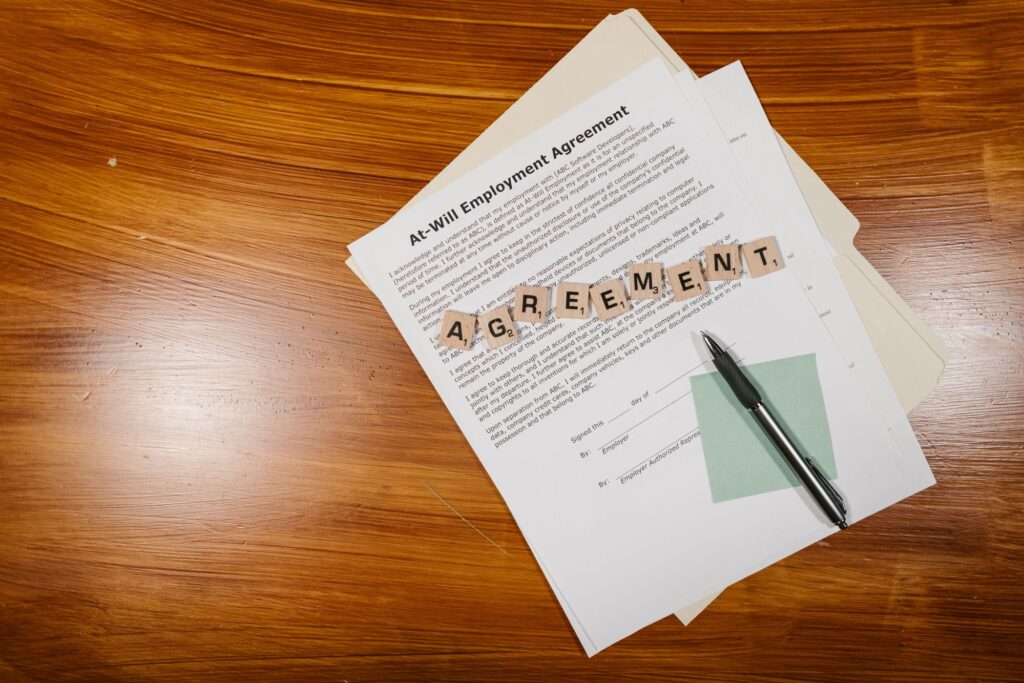
A letter of recommendation is not a required document for a Singapore Permanent Residence (PR) application. What the Immigration & Checkpoints Authority (ICA) does require from employed applicants is a letter of employment from the current employer and payslips from the last 6 months. A recommendation letter for PR application purposes is an optional extra that can add third-party evidence of your contribution and integration, provided every detail in it is accurate.
Key Takeaways
|
Table of Contents
- What Does ICA Require From Your Employer?
- Is a Letter of Recommendation Mandatory for a PR Application?
- Who Should Write a PR Recommendation Letter?
- What Should a Recommendation Letter for a PR Application Include?
- How Should the Letters Be Formatted?
- What Should You Avoid Putting in These Letters?
- What Does a Recommendation Letter Structure Look Like?
- Worked Example
- Frequently Asked Questions
What Does ICA Require From Your Employer?
ICA publishes a two-page Document Checklist for Permanent Residence. Its employment section is the part that involves your employer directly. These documents are compulsory for applicants who work, and they carry far more weight than any optional letter.
Letter of Employment
The checklist asks for a letter of employment from your current employer. It must be dated no more than 3 months from the date of your online application.
The letter must state four things:
- Your occupation.
- Your date of employment.
- Your basic monthly salary.
- Your gross monthly salary.
The checklist does not ask for allowances, bonuses or a description of your duties. Many employers add a short paragraph on role scope anyway, which is fine as long as the four required details are clear and correct.
Payslips and Income Tax Documents
You need payslips from the last 6 months. If you are working overseas, the checklist also asks for the latest 3 years’ income tax assessments or receipts.
Documents for Self-Employed Applicants
Business owners have no employer to issue a letter. The checklist asks them for the following:
| Document | Period |
|---|---|
| Business Registration Certificate from the Accounting and Corporate Regulatory Authority (ACRA) | Latest |
| Balance sheets | Latest 3 years |
| Profit and loss statements | Latest 3 years |
ICA also notes that it may contact the main applicant or sponsor for other supporting documents not listed on the checklist. If you cannot provide a document ICA asks for, ICA says you must upload an explanatory letter instead. Our guide on what documents you need for a Singapore PR application covers the personal, family and education items on the same checklist.
Is a Letter of Recommendation Mandatory for a PR Application?
No. ICA’s checklist does not mention recommendation letters, testimonials or letters from community organisations. Leaving one out does not make your application incomplete.
The table below separates what ICA requires from what is optional.
| Document | Status per ICA checklist | Who issues it |
|---|---|---|
| Letter of employment | Required for employed applicants | Current employer (usually HR) |
| Payslips, last 6 months | Required for employed applicants | Current employer |
| Income tax assessments, latest 3 years | Required if working overseas | Tax authority |
| ACRA Business Registration Certificate and 3 years of accounts | Required for self-employed applicants | ACRA and the business |
| Explanatory letter | Required only if you cannot furnish a requested document | Applicant |
| Letter of recommendation or testimonial | Not listed (optional) | Manager, community organisation, clan association, grassroots leader |
Optional letters exist because of how ICA assesses applications. ICA says it considers family ties to Singaporeans, economic contributions, qualifications, age, family profile and length of residency. It uses these to judge your ability to contribute, to integrate into society and your commitment to sinking roots.
The checklist and the online form capture salary and job title. They say much less about volunteering, community roles or the specific value you bring to an employer. A well-written letter of recommendation fills that gap with evidence from someone other than you. It cannot replace a weak profile or missing required documents, which is why our Singapore Permanent Residence application service starts with the compulsory items.
Who Should Write a PR Recommendation Letter?
Choose writers who know you directly and can describe specific things you have done. Seniority helps, but first-hand knowledge matters more.
Your Employer or Direct Manager
A manager can speak to your contribution in ways an HR letter does not. Good examples are projects you led, teams you built, local hires you trained or business you brought into Singapore. This letter is separate from the compulsory letter of employment and should not repeat it.
Community Organisations and Volunteer Groups
Charities, religious organisations, sports clubs and Self-Help Groups can confirm sustained volunteering. Ask the person who coordinates your activities, since they can state dates and hours.
Clan Associations
Clan and cultural associations can describe your membership and involvement in their events. This is relevant evidence of ties to Singapore society, particularly if your role goes beyond paying a membership fee.
Grassroots Organisations
If you volunteer with a Residents’ Committee, Community Club or other grassroots organisation under the People’s Association, an adviser or committee chair can write about your involvement in the neighbourhood.
Avoid letters from family members or from people who have only met you socially a few times. They add little.
What Should a Recommendation Letter for a PR Application Include?
A useful letter of recommendation is specific, verifiable and consistent with the rest of your application. Ask each writer to cover these points.
Who the Writer Is
The letter should open with the writer’s full name, position, organisation and contact details. ICA should be able to tell why this person is qualified to comment.
How Long and in What Capacity They Know You
State the relationship and how long it has lasted, for example “your direct supervisor since March 2021”. Vague phrases such as “I have known the applicant for some time” weaken the letter.
Your Role, Tenure and Salary
For work-related letters, the writer can mention your job title and how long you have been with the organisation. These details must match your letter of employment exactly. Salary can be left out, since the letter of employment and payslips already prove it, but if it is mentioned it must match those documents to the dollar.
Specific Contributions
This is the core of the letter. Concrete examples carry weight: a regional function set up in Singapore, a number of local staff trained, a client programme delivered, years of weekly volunteering. Figures should be ones the writer can verify.
Evidence of Integration
Letters from community writers should describe what you actually do in Singapore: the activities, how often and since when.
A Clear Statement of Support
Close with a direct statement that the writer supports your application, followed by a signature and the date.
How Should the Letters Be Formatted?
Format matters because ICA reviews letters alongside your official records.
- Print on the organisation’s official letterhead where one exists.
- Address the letter to the Immigration & Checkpoints Authority.
- Date the letter recently. For the compulsory letter of employment, ICA’s limit is 3 months before your online application. Using the same window for optional letters keeps the bundle consistent.
- Keep it to one page, two at most.
- Sign by hand or with a verifiable digital signature, and include the writer’s designation and contact details.
- Write in English. ICA requires official translations for documents in other languages, from the issuing embassy, a notary public, or a private translation attested by the embassy.
- Scan as a clear, legible file before uploading.
What Should You Avoid Putting in These Letters?
Most problems come from inconsistency or overstatement. A letter that conflicts with your payslips or ICA’s records raises more questions than having no letter at all.
Exaggeration
Inflated job titles, invented achievements or “indispensable to the company” claims without evidence do not help. ICA can compare letters against your employment documents, and gaps are easy to spot.
False Statements
Making a false statement to obtain an immigration facility is an offence under section 57(1)(k) of the Immigration Act. ICA has stated that the penalties are a fine not exceeding S$4,000, imprisonment for a term not exceeding 12 months, or both.
The risk extends to the writer. Ask anyone writing for you to state only what they know to be true.
Copied Templates and Contradictions
Letters that read identically, or that follow an online template word for word, look ghostwritten. Give your writers bullet points of facts, then let them write in their own words. Then check names, passport spelling, job titles, dates and salary against every other document.
These points also apply if you reapply. Our guide on what to do after a PR application is rejected covers how to review your documents before submitting again.
What Does a Recommendation Letter Structure Look Like?
This is an outline of the structure, not wording to copy. Each writer should fill it with their own facts and phrasing.
- Letterhead and date. Organisation name, address and the date of signing.
- Addressee. “To the Immigration & Checkpoints Authority”.
- Subject line. “Letter of recommendation for [applicant’s full name], [passport or FIN number]”.
- Introduction of the writer. Name, position, organisation, and how long and in what capacity they know the applicant.
- Role and tenure, or community involvement. Facts that match the applicant’s other documents.
- Two or three specific contributions. Each with a date range and, where possible, a measurable result.
- Integration and ties to Singapore. Only what the writer has observed directly.
- Statement of support. One or two sentences.
- Sign-off. Signature, full name, designation, phone and email.
For EP holders, these letters sit on top of the work pass record ICA already sees. If you are still building that record, our Employment Pass and S Pass application service covers the pass itself.
Worked Example
The scenario below is illustrative only. It does not describe a real applicant.
Arjun is an Employment Pass (EP) holder who has worked in Singapore for 5 years as a regional finance manager. He is applying for PR without a sponsor, which ICA allows for EP and S Pass holders.
His compulsory employment documents are:
| Item | What he prepares |
|---|---|
| Letter of employment | Issued by HR 3 weeks before he submits online, stating occupation, date of employment, basic monthly salary and gross monthly salary |
| Payslips | The 6 most recent months |
He then adds two optional letters:
- A letter from his regional director describing the Singapore shared-services team he set up and the 8 local staff he hired and trained. It does not mention salary.
- A letter from the coordinator of a food-distribution charity confirming he has volunteered twice a month since 2022.
Before uploading, Arjun checks that his job title, start date and name spelling are identical across all three letters and his payslips. He does not include a third letter from a family friend, since it would add nothing the other two do not.
Written by:
Reviewed by:
Frequently Asked Questions
ICA does not publish how it checks individual letters. It can contact the main applicant or sponsor for further documents, so treat every letter as something that may be checked. Only include statements the writer can stand behind.
ICA sets no number, because the letters are not required. One or two strong letters from writers with first-hand knowledge are usually enough. A large stack of generic letters does not strengthen an application.
You can give your manager a list of facts and dates to work from. The letter itself should be written by the person signing it, in their own words. A letter that does not reflect the signer’s own knowledge risks containing statements they cannot confirm.
The letter of employment is on ICA’s checklist for employed applicants, so ask HR again and explain the four details ICA needs. If a requested document truly cannot be provided, ICA requires you to upload an explanatory letter. ICA also warns that insufficient documentation may result in non-acceptance of your application.
ICA does not say that recommendation letters affect the outcome. They can support the factors ICA does assess, such as economic contribution and integration. Our article on how to strengthen your Singapore PR application covers the factors that matter more.
It can include a short paragraph on your role, but keep the four required details prominent. Some applicants prefer a separate letter from a line manager, so the HR letter stays factual and the recommendation stays personal.
ICA’s checklist does not ask for recommendation letters to be notarised. Notarisation or embassy attestation applies to translations of documents not in English. An English letter on letterhead with a signature is normally enough.
ICA says it generally processes applications within 6 months, provided you submit all the required documents. Some applications take longer. Sending a complete employment section at the start, including a current letter of employment, avoids requests for missing items later.
No. ICA’s checklist does not ask for letters from Members of Parliament or any public office holder. A letter from someone who knows your contribution directly is more useful than one from a well-known name who does not.
Get Your PR Documents Reviewed Before You Submit
A missing employer detail or a contradiction between letters can hold up an application that took months to prepare. Xignam’s consultants review PR bundles, including employer letters and recommendation letters, before submission. Book a consultation with our Singapore immigration specialists to check your documents before you apply.
Last updated: 12 November 2026
Sources
- ICA: Becoming a Permanent Resident
- ICA: Document Checklist for Permanent Residence (PDF)
- Ask.gov.sg (ICA): Do I need to submit any supporting documents to support my Singapore PR application?
- Ask.gov.sg (ICA): What if I am unable to provide the requested document by ICA?
- ICA media release: penalties for false statements under section 57(1)(k) of the Immigration Act