Singapore PR Scams: How to Spot Fake PR Agents and ICA Letters
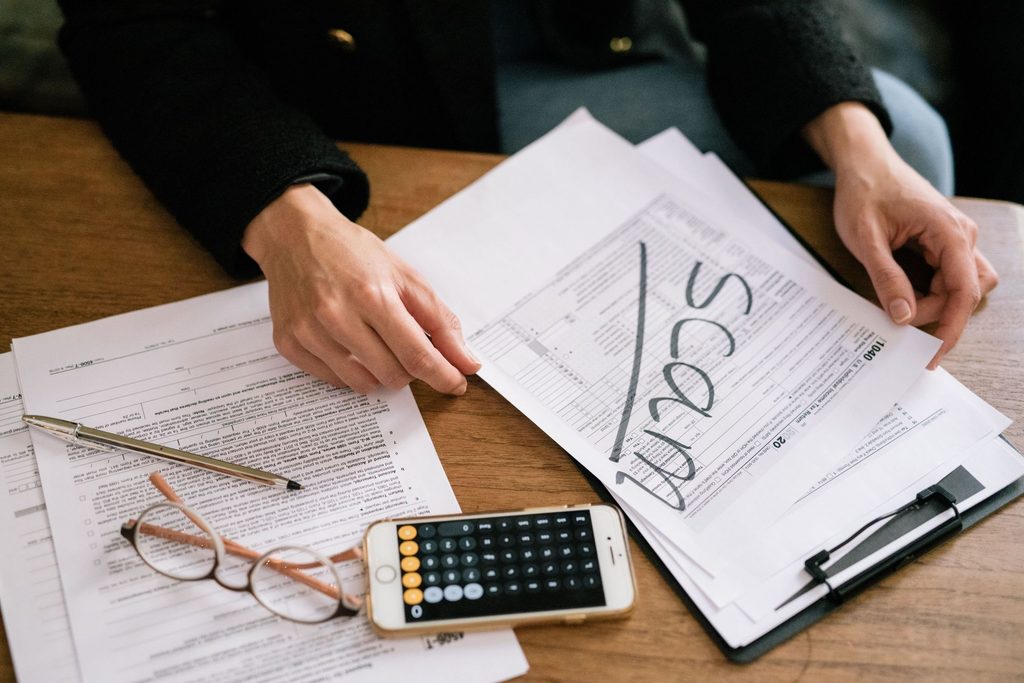
A Singapore PR fraudulent scheme usually follows one pattern: an “agent” promises to improve or guarantee your Permanent Residence (PR) outcome, collects fees by bank transfer or cash, then sends a forged letter on Immigration & Checkpoints Authority (ICA) letterhead. ICA does not appoint agents, nobody outside ICA can influence the decision, and every genuine application is submitted online through ICA’s own website with a Singpass login. If a letter or email about your PR application cannot be matched to what you see in ICA’s MyICA portal, treat it as fake until ICA confirms otherwise.
Key Takeaways
|
Table of Contents
- What Has ICA Warned the Public About?
- How Does a Fake PR Agent Scheme Work?
- What Are the Red Flags of a Singapore PR Fraudulent Scheme?
- Does ICA Appoint PR Agents or Consultants?
- How Does ICA Actually Communicate PR Outcomes?
- How Can You Verify an ICA Letter or Email?
- Where Should You Report a PR Scam?
- What Happens If Your Application Contains False Information?
- What Does This Look Like in Practice?
- Frequently Asked Questions
What Has ICA Warned the Public About?
ICA and the Police have issued several advisories in 2026 about scams that target PR applicants. Each one describes a slightly different angle, so it helps to read them together.
| Date | Issued by | What it warned about | Reported figures |
|---|---|---|---|
| 28 March 2026 | ICA | Fake letters and a tax invoice bearing the ICA letterhead and a forged signature of an alleged ICA officer | 12 reports of fake ICA letters on long-term immigration applications since January 2026 |
| 22 April 2026 | SPF | Facebook and Instagram ads offering help with PR applications, followed by forged supporting documents and fake ICA documents on PR status | At least 24 cases and about S$397,000 lost since 1 January 2026 |
| 10 June 2026 | ICA | Scammers posing as ICA officers on phone or video calls, and scammers claiming a friend or relative has been detained by ICA | Not stated |
| 25 September 2026 | SPF and ICA (joint) | Fake PR consultancy websites, WhatsApp contact, and fake automated emails carrying a forged In-Principle Approval (IPA) letter | At least 31 PR assistance cases and at least S$400,000 lost since January 2026 |
In the March 2026 case, ICA said the applicant had paid a commercial entity close to S$5,000 for help with a PR application. The fake letter then asked for a further fee to proceed. ICA’s checks found that no application had ever been submitted for that person.
This is why ICA warns the public of fake PR application letters so firmly. The letter looked official, but the application it referred to did not exist.
How Does a Fake PR Agent Scheme Work?
The Police and ICA advisories describe a fairly consistent sequence. Knowing the order helps you spot it early.
- You see a social media advert, often on Facebook or Instagram, offering help with Singapore PR.
- The advert links to a consultancy website that collects your name and mobile number.
- Someone contacts you on WhatsApp and quotes fees. The September 2026 advisory recorded fees from S$200 to around S$90,000.
- You are told that a company investment, an academic certification or a donation will improve your chances, and you are asked to pay for it.
- You receive forged supporting papers, such as fake ACRA shareholder certificates, school certificates or donation receipts.
- Payment is requested by bank transfer to an individual, or as cash handed to a stranger.
- You receive an email that appears to come from ICA, with an IPA letter on ICA letterhead attached. The letter is fake.
Many victims only found out when they contacted ICA directly. By then, the money had usually gone.
An IPA letter is the document ICA issues when a PR application is approved in principle. The approved applicant then completes formalities to receive the Singapore Identity Card. Scammers copy this document because applicants are waiting for it.
What Are the Red Flags of a Singapore PR Fraudulent Scheme?
Use this checklist whenever someone offers to help with your PR application, or when you receive any document about your status.
| Red flag | Why it matters |
|---|---|
| “Guaranteed approval” or a promised success rate | ICA does not endorse anyone who claims to improve PR outcomes. Only ICA decides. |
| Payment to a personal bank account, or cash handed to a stranger | ICA has said it will never request fee payments via bank transfer. The genuine S$100 fee is paid during the online submission. |
| Fees for investments, certificates or donations to “boost” your profile | This is the exact method described in the April and September 2026 Police advisories. |
| A request for your Singpass ID, password or one-time passcode | Singpass credentials should never be shared. The applicant or sponsor logs in personally to submit and make declarations. |
| An ICA letter you cannot match to anything in MyICA | ICA’s checks in the March 2026 case found no application had been submitted at all. |
| ICA letterhead with a named officer’s signature asking for more money | ICA confirmed that letters and invoices of this kind were not issued by ICA. |
| First contact through a social media advert, then WhatsApp | Both 2026 Police advisories on PR scams started this way. |
| A request to meet a stranger to sign papers, such as a non-disclosure agreement | The September 2026 advisory described victims of ICA impersonation scams being asked to sign fake documents in person. |
| A caller who transfers you to “the Police” or another official | ICA and the Police state that government officers never transfer your call to the Police. |
| A link to a website that does not end in .gov.sg | Official government website links end with .gov.sg. |
One red flag on its own is enough to stop and verify. Two or more together almost always mean a scam.
Does ICA Appoint PR Agents or Consultants?
No. ICA states on its PR application page that it has no affiliation with external migration agencies or commercial entities that call themselves Singapore immigration specialists or partners.
ICA also says it does not support or endorse self-proclaimed immigration consultancy services for PR applications. In its 2026 advisories, ICA advised the public to apply directly through the ICA website and to be cautious if they choose to engage a consultant.
So any firm that describes itself as “ICA-approved”, “ICA-appointed” or an “official ICA partner” is making a claim ICA has publicly contradicted.
A legitimate consultant can help you understand the criteria, organise your documents and present your circumstances clearly. That is administrative support. It does not change how ICA assesses you, and it cannot speed up or secure an approval. If you are weighing up this choice, our article on whether to apply for PR yourself or hire an advisor sets out what each route involves.
How Does ICA Actually Communicate PR Outcomes?
Knowing the genuine process makes fake letters much easier to recognise.
Submission
All PR applications are submitted online through ICA’s website. Applicants and sponsors log in with Singpass, or with ICA-issued credentials if they are not eligible for Singpass. Where there is a local sponsor, the sponsor completes the form, but the applicant must review it and make their own declarations before it is submitted.
Fees
| Stage | Fee |
|---|---|
| Application submission | S$100 per applicant (non-refundable) |
| Entry Permit (on approval) | S$20 |
| 5-year Re-Entry Permit (on approval) | S$50 |
| Singapore Identity Card (on approval) | S$50 |
There is no fee for “processing priority”, “profile enhancement” or “officer review”. Any request outside this table should be questioned.
Processing and Outcome
ICA generally processes PR applications within 6 months, provided all required documents are submitted. Some applications take longer.
The outcome is sent by email. You can also check your status online through MyICA, ICA’s portal for applicants. If you are approved, you receive an IPA letter and complete formalities for your IC.
Our guide on tracking your Singapore PR application progress explains what each status stage means.
How Can You Verify an ICA Letter or Email?
Do not rely on how a document looks. Scammers reproduce the ICA crest, letterhead and signatures, and email sender addresses can be spoofed.
- Log in to MyICA yourself, by typing the ICA website address into your browser rather than clicking a link in the message.
- Check that the application, its reference and its status match what the letter says.
- Check that any website you were sent to ends in .gov.sg.
- If anything is unclear, contact ICA through its Feedback Form at ica.gov.sg/feedbackform or call ICA’s call agents on 6391 6100.
- Check suspicious numbers, messages and links through the ScamShield app or scamshield.gov.sg.
If an agent told you your application was submitted but MyICA shows nothing, stop paying and contact ICA.
Where Should You Report a PR Scam?
| Situation | Where to go |
|---|---|
| You are unsure whether a call, message or letter is a scam | ScamShield Helpline 1799 (24 hours, 7 days) |
| You want to confirm whether a letter or email came from ICA | ICA Feedback Form or 6391 6100 |
| You have already paid or shared bank details | Your bank, immediately, then lodge a Police report |
| You have information about a scam | Police Hotline 1800-255-0000 or police.gov.sg/i-Witness |
ICA has said it takes these scams seriously and asks the public to report them. Report even if you did not lose money, since your details may be used to target others.
What Happens If Your Application Contains False Information?
Some scam operators supply fake documents, such as forged academic certificates or shareholder records, and present them as a way to “strengthen” an application. Submitting them puts you at legal risk, even if the agent prepared them.
Under section 57(1)(k) of the Immigration Act, a person who obtains or attempts to obtain an entry or re-entry permit, pass, visa or certificate by making a false statement commits an offence. PR status is granted through an Entry Permit. The penalty is a fine of up to S$4,000, imprisonment of up to 12 months, or both.
ICA has stated that it takes a very serious view of people who give false information or conceal material facts. Those found doing so may have their immigration facilities deprived or revoked, and ICA may also review the status of their family members.
In a case ICA published in January 2020, a foreign national was sentenced to seven weeks’ imprisonment for false statements in PR applications for herself and her daughter. Verification with the overseas university showed it had no record of her enrolment.
You are the one making the declarations in your application. That responsibility stays with you, regardless of who helped prepare the file. Our guide on the documents you need for a Singapore PR application lists what genuine supporting evidence looks like.
What Does This Look Like in Practice?
The scenario below is illustrative only. It is not based on any real client.
A software engineer on an Employment Pass sees an Instagram advert promising “PR in 3 months, 95% success rate”. After entering his number on the linked website, he is contacted on WhatsApp. The “consultant” quotes S$6,000, split into an “application fee” and a “donation to improve your profile”, both payable to a personal bank account.
He pays. Two weeks later he receives an email with an IPA letter on ICA letterhead, asking for a further S$2,500 “formalities fee” by bank transfer.
He logs in to MyICA and finds no PR application on record. He calls ICA on 6391 6100, which confirms it has no record of the application. He alerts his bank the same day and lodges a Police report.
Several red flags appeared before he paid anything: a promised success rate, a donation framed as a booster, payment to an individual and contact moved to WhatsApp. Checking MyICA before paying the second amount stopped further losses.
Written by:
Reviewed by:
Frequently Asked Questions
The application is submitted online with the Singpass login of the applicant or sponsor, and the applicant must make their own declarations. A consultant can help you prepare documents and review your form. You should never hand over your Singpass credentials to anyone.
ICA’s published position is that it does not support or endorse consultants who claim to improve PR outcomes, and it advises caution if you engage one. ICA does not state that using a consultant is prohibited. The key is that the consultant cannot influence ICA’s decision and you remain responsible for your declarations.
The application fee is S$100 per applicant, paid at submission and non-refundable. If approved, there are further fees of S$20 for the Entry Permit, S$50 for a 5-year Re-Entry Permit and S$50 for the IC. Anything beyond these is not an ICA charge.
There is no guarantee of recovery. Contact your bank immediately to report the fraudulent transaction, then lodge a Police report. Acting quickly gives the bank and Police the best chance of intervening.
ICA and the Police have stated that government officials will never ask you to transfer money, share banking login details, install apps from unofficial app stores, or transfer your call to the Police. If you receive a call claiming to be from ICA, end it and call ICA on 6391 6100 to check.
Yes. ICA’s June 2026 advisory described scammers impersonating a friend or relative and claiming that person had been detained by ICA. ICA said it will never ask for payment to release a person allegedly detained by the authorities.
ICA generally processes applications within 6 months, as long as all required documents are submitted. Some take longer. Anyone promising a much faster outcome for an extra fee is not offering something ICA provides.
The Police advisories in April and September 2026 named Facebook and Instagram adverts as the starting point. These led to fake consultancy websites, then WhatsApp conversations. Be cautious of any PR offer that arrives through a sponsored post.
Want Help Preparing a Genuine PR Application?
Xignam Consulting helps applicants prepare complete, accurate PR applications. We explain the criteria, organise your supporting documents and review your submission before you or your sponsor submit it through ICA. We do not claim any link to ICA, and no consultant can guarantee an outcome. Learn more about our Singapore Permanent Residency application support and wider immigration services, or book a consultation with our immigration specialists.
Last updated: 12 November 2026
Sources
- ICA: Public Advisory on Fake Letters Bearing ICA Letterhead and Forged Signature (28 March 2026)
- SPF: Police Advisory on Scam Variant Involving Fraudulent Social Media Advertisements (22 April 2026)
- ICA: Public Advisory on Scams Involving ICA (10 June 2026)
- SPF and ICA: Advisory on Scams Involving the Immigration & Checkpoints Authority (25 September 2026)
- ICA: Becoming a Permanent Resident
- ICA: Female Filipino National Jailed for Making False Statements in Permanent Residency Applications
- Supreme Court of Singapore judgment [2019] SGHC 169, reproducing section 57(1)(k) of the Immigration Act
- SPF: Multiple Avenues Available to Obtain and Report Information on Scams
- GovTech: How to Tell If It’s a Scam
- ScamShield